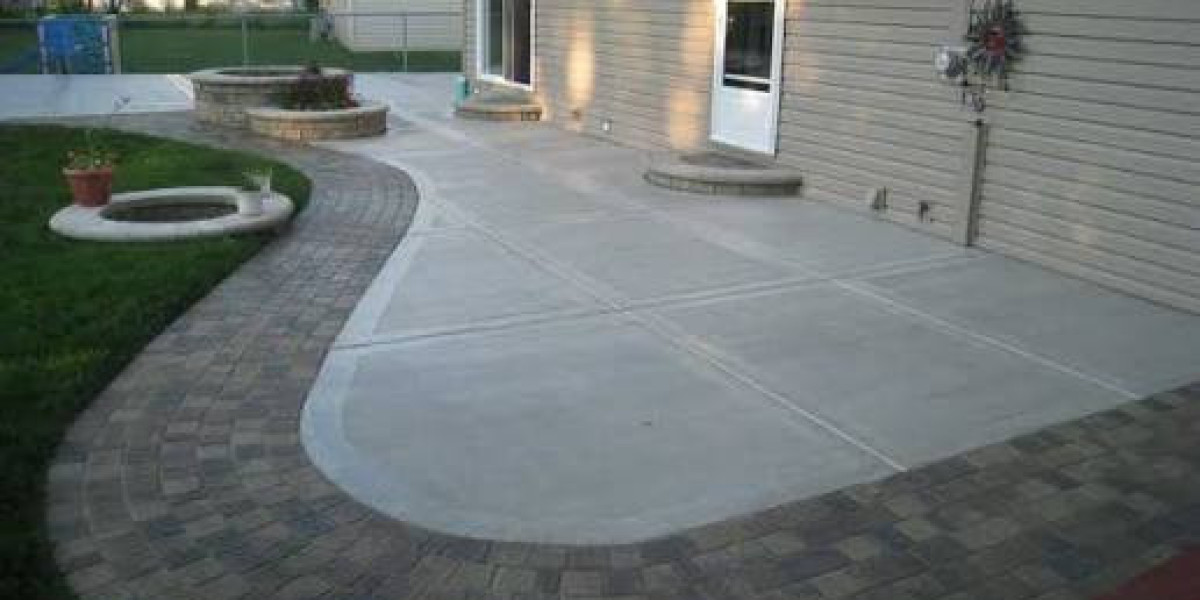

Introduction
A concrete patio can create a comfortable outdoor area for dining, relaxing, entertaining guests, or enjoying time with family. Because concrete is widely available and the basic installation process may appear straightforward, many homeowners consider building a Do It Yourself Concrete Patio instead of hiring a contractor. However, installing a patio involves much more than mixing and pouring concrete. Proper planning, accurate measurements, excavation, drainage, base preparation, formwork, reinforcement, finishing, and curing all affect the final result. A mistake during any of these stages can lead to cracking, uneven surfaces, poor drainage, or premature deterioration. For a small and simple project, an experienced homeowner with the right equipment may be able to handle some of the work. Larger patios, sloped properties, difficult access, drainage concerns, or complex designs may require professional assistance. Understanding the complete process before starting can help you decide whether a DIY approach is realistic for your property and whether it can provide the durable outdoor surface you expect.
What Should You Consider Before Building a Concrete Patio?
Before starting a concrete patio project, consider the size, location, purpose, slope, surrounding landscape, and expected use of the space. A patio used for outdoor furniture may have different requirements from one designed for a large dining area or outdoor kitchen. The location should also provide convenient access from the home while allowing rainwater to move away from the building. Check the ground carefully for low areas where water already collects because placing a patio over poor drainage can create problems later. Property owners should also consider nearby trees, roots, utility lines, existing walkways, and the position of doors and steps. Planning the layout before excavation can prevent costly changes during construction. Local regulations may also apply depending on the size and location of the project. Taking time to plan the site is one of the most important steps because the quality of the finished patio depends heavily on the conditions underneath and around it.
How Do You Prepare the Ground for a Concrete Patio?
Ground preparation is one of the most important stages of a Do It Yourself Concrete Patio. Start by marking the planned patio area accurately and removing grass, vegetation, organic soil, and other unsuitable material. The excavation depth depends on the project design, existing ground conditions, base requirements, and local conditions. The ground should be shaped to provide a stable foundation and appropriate drainage. Soft or unstable areas may need additional excavation and replacement with suitable compactable material. Simply pouring concrete directly over grass or loose soil can lead to settlement and cracking because the supporting ground is not stable enough. Once the area has been excavated, the exposed soil should be compacted as appropriate before the aggregate base is installed. Proper preparation takes time, but it can significantly improve the stability of the finished patio and reduce the risk of movement beneath the concrete.
Why Is a Gravel or Aggregate Base Important?
A properly prepared aggregate base can provide stability beneath a concrete patio and help create more consistent support. After excavation, a suitable layer of compactable aggregate can be placed over the prepared ground. The material should be distributed evenly and compacted properly rather than simply spread loosely across the site. The required base thickness depends on soil conditions, climate, drainage, patio use, and project specifications. A stable base can help reduce settlement by creating a more uniform supporting layer between the concrete and natural soil. It can also contribute to drainage when the overall site is designed correctly. When building a Do It Yourself Concrete Patio, homeowners should not overlook this stage simply because it will eventually be hidden beneath the concrete. A beautiful surface cannot compensate for an unstable foundation. Proper compaction and preparation are essential before moving on to formwork and concrete installation.
How Do You Build Forms for a Concrete Patio?
Forms create the boundary that holds wet concrete in the desired shape until it hardens. For a rectangular patio, straight boards are commonly used to create the sides, while more complex designs may require additional cutting and careful layout. The forms should be positioned accurately according to the planned dimensions and secured firmly enough to resist the pressure of wet concrete. Check the measurements from multiple points before pouring because small errors can become noticeable once the patio is finished. The top of the forms should also establish the intended elevation and slope. If the patio connects to a house, walkway, or steps, the finished height should be planned carefully to avoid creating an uneven transition. During a Do It Yourself Concrete Patio project, poorly secured or incorrectly positioned forms can cause the final slab to have uneven edges or incorrect dimensions. Careful form installation makes the later stages much easier.
How Should You Plan Patio Drainage?
Drainage should be considered before the concrete is poured because correcting water problems after installation can be difficult and expensive. A patio should generally be designed so rainwater moves away from the home and does not collect against walls, doors, or foundations. The required slope depends on the project and site conditions, but the important principle is that the surface should have a planned path for water. Low spots can create puddles that may contribute to staining, surface deterioration, or slippery conditions. Downspouts should also be directed appropriately so roof runoff does not discharge directly onto the patio. If the property has significant drainage problems, a simple DIY slab may not be enough to solve them. During planning for a Do It Yourself Concrete Patio, use a level and appropriate measuring tools to establish consistent elevations. If you cannot confidently establish drainage and elevation, professional help may be worthwhile before concrete is ordered.
Does a Concrete Patio Need Reinforcement?
Reinforcement can be used to help control cracking and improve the performance of a concrete slab, although the appropriate reinforcement method depends on the project's design and requirements. Options can include welded wire reinforcement, reinforcing bars, or other systems specified for the application. Reinforcement does not make concrete completely crack-proof because concrete naturally experiences shrinkage and movement. Instead, properly designed reinforcement can help control cracking and maintain the integrity of the slab. The placement of reinforcement is also important. Simply putting reinforcing material on the ground and pouring concrete over it without proper support may not provide the intended benefit. For a Do It Yourself Concrete Patio, homeowners should follow the requirements of the selected design and local construction practices. Larger slabs, areas supporting heavy structures, or patios with unusual site conditions may require professional engineering or contractor guidance.
How Do You Pour Concrete for a Patio?
Concrete placement should be planned carefully because once the concrete arrives, the work needs to proceed efficiently. The amount of concrete required should be calculated before ordering, with measurements checked carefully to reduce the risk of ordering too little or unnecessarily large quantities. For a small project, mixing bags on site may be possible, but larger patios often require ready-mixed concrete and enough people to distribute and finish it efficiently. Once the concrete is placed inside the forms, it needs to be spread evenly and consolidated appropriately. The surface is then leveled using suitable tools. Timing is extremely important because concrete begins changing from a workable material into a hardened surface after placement. A homeowner working alone may find a larger patio difficult to manage within the required time. For this reason, the size of the project should be considered carefully before deciding on a DIY installation.
How Do You Finish a Concrete Patio?
Finishing determines much of the final appearance and texture of a concrete patio. After the concrete has been placed and leveled, the surface can be worked using appropriate finishing tools to achieve the desired result. A basic patio may have a smooth or lightly textured finish, while an exterior surface often benefits from texture that provides better traction when wet. Decorative options can include exposed aggregate, stamped patterns, borders, or other treatments, but these require additional skill and timing. Finishing should not be rushed or performed too early because excess water on the surface can affect the final quality. A Do It Yourself Concrete Patio requires close attention to the concrete's condition throughout the finishing process. Weather can also influence how quickly concrete sets. Hot, windy, or unusually cool conditions can change the working time and curing requirements, making careful planning especially important.
Why Are Control Joints Important in Concrete?
Concrete naturally changes volume as it dries and experiences temperature changes. Control joints are incorporated into slabs to create planned locations where shrinkage-related cracking can occur. Without appropriately placed joints, cracks may develop randomly across the patio surface. Joint layout should consider the slab's shape, dimensions, thickness, and construction details. Long narrow sections and irregular shapes may require additional planning because they can be more susceptible to uncontrolled cracking. During a Do It Yourself Concrete Patio installation, joints should be planned before the concrete is poured rather than added as an afterthought. The timing and method used to create the joints are also important because they need to be formed or cut while the concrete is at an appropriate stage. Proper joint planning does not eliminate all cracking, but it can help make expected movement more controlled and visually manageable.
How Long Does a Concrete Patio Need to Cure?
Curing is essential because concrete needs time to develop strength and durability after placement. Curing is different from simply waiting for the concrete to become hard enough to walk on. The concrete continues developing strength as it hydrates, and maintaining suitable moisture and temperature conditions can support this process. The appropriate curing method depends on the concrete mixture, weather, slab design, and project requirements. Homeowners should follow the recommendations provided by the concrete supplier or contractor. Avoid placing heavy loads on a new patio until it has reached the appropriate level of strength. Furniture and normal foot traffic may be allowed sooner than vehicles or heavy structures, but the exact timing depends on the specific project. Rushing this stage can compromise a patio that otherwise appears properly installed. Good curing practices are therefore a critical part of creating a durable concrete surface.
What Mistakes Should You Avoid When Building a Patio?
DIY concrete projects can fail when homeowners underestimate the importance of preparation and timing. One common mistake is pouring concrete over unstable soil without adequate base preparation. Another is creating a patio without enough slope for drainage, resulting in standing water near the home. Poorly secured forms can also produce uneven edges, while insufficient planning can result in an incorrect amount of concrete. Other problems can occur when reinforcement is improperly positioned, control joints are omitted, or finishing is performed incorrectly. Weather conditions can create additional challenges by changing the rate at which concrete sets. During a Do It Yourself Concrete Patio project, it is important to understand that each stage affects the next one. Rushing excavation, base preparation, formwork, placement, finishing, or curing can reduce the quality of the entire project. If a homeowner is uncertain about any major stage, professional assistance can prevent expensive mistakes.
Can You Build a Patio Without Professional Help?
Whether a homeowner should build a patio independently depends on the size and complexity of the project, available tools, physical ability, experience, and site conditions. A small, simple patio on level ground may be manageable for someone with construction experience and enough help. Larger patios are more challenging because concrete placement and finishing often require several people working efficiently at the same time. Properties with slopes, poor drainage, difficult access, unstable soil, retaining walls, or complicated connections to existing structures can make DIY installation considerably more difficult. Before beginning a Do It Yourself Concrete Patio, homeowners should realistically evaluate whether they can complete every stage correctly, not just the pouring stage. Professional installation may be the better choice when the project is large or when mistakes could affect drainage, foundations, walkways, or other structures.
How Can You Maintain a Concrete Patio?
A properly installed concrete patio can remain useful for many years with appropriate care. Regularly remove leaves, dirt, and debris so that the surface remains clean and easier to inspect. Watch for cracks, settlement, drainage problems, surface deterioration, or areas where water consistently collects. Minor issues should be evaluated early rather than ignored until they become extensive. Avoid using harsh chemicals or aggressive cleaning methods unless they are suitable for the specific concrete finish. Heavy objects should be handled carefully, particularly if the slab was not designed for significant loads. Maintaining nearby gutters and downspouts can also reduce unnecessary water exposure. If a patio develops major cracking, sinking, exposed reinforcement, or significant surface damage, professional inspection can help identify the cause. Maintenance cannot prevent all concrete aging, but it can help preserve the appearance and functionality of the patio.
When Should You Hire a Concrete Professional?
Professional assistance can be valuable when a patio is large, structurally complicated, heavily used, or located on challenging ground. A contractor can evaluate soil conditions, drainage, elevations, base preparation, reinforcement, concrete specifications, and finishing requirements before construction begins. Professional installation can also be particularly useful when the patio connects to a foundation, retaining wall, outdoor kitchen, steps, or other permanent structures. If a homeowner wants decorative finishes, curved designs, multiple elevations, or complex drainage, professional experience can reduce the risk of expensive mistakes. While a Do It Yourself Concrete Patio may appear less expensive initially, the cost of correcting a failed slab can be considerably higher than getting the work done correctly the first time. The right choice depends on the project's size, complexity, budget, and the homeowner's experience.
Conclusion
A Do It Yourself Concrete Patio can be a rewarding home improvement project when the site is suitable and the homeowner has the necessary skills, tools, time, and assistance. However, a durable patio requires careful planning from the ground up. Proper excavation, a stable aggregate base, secure forms, effective drainage, suitable reinforcement, controlled concrete placement, proper finishing, control joints, and adequate curing all contribute to the final result. Homeowners should not focus only on the appearance of the finished surface because most long-term problems begin beneath or around the concrete. For larger or more complicated projects, professional installation can provide valuable expertise and reduce the risk of costly repairs. When homeowners need dependable concrete, paving, masonry, patio, and exterior improvement services, Promaster Maintenance Corp Paving and Masonry can provide professional solutions focused on careful preparation, quality workmanship, attractive results, and long-term performance.